Navigating Institutional DeFi Yield Farming
Analyze risk-adjusted return vectors, stablecoin supply constraints, and protocol emissions to optimize your decentralization finance (DeFi) yield strategy.
play_circle Institutional DeFi Yield Farming Masterclass
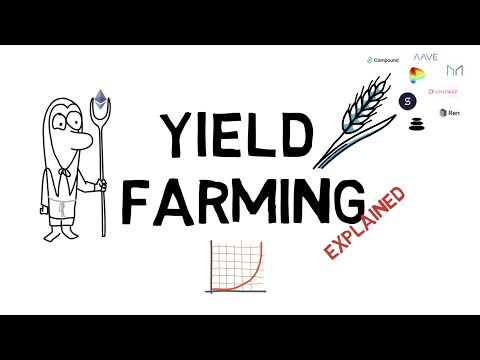
Strategic Briefing: Learn how to optimize risk-adjusted returns and manage liquidity in decentralized finance protocols.
The Architecture of On-Chain Yield
DeFi yield is generated primarily through three vectors: staking rewards, liquidity provider (LP) fee generation, and token emission incentives. Understanding the underlying source of the yield is critical to evaluating the risk of capital impermanence or protocol insolvency.

Evaluating Risk-Adjusted Returns and Impermanent Loss
While triple-digit APYs are enticing, they often mask severe inflationary tokenomics or underlying smart-contract risks. Providing liquidity to an Automated Market Maker (AMM) exposes capital to Impermanent Loss (IL)—the mathematical phenomenon where the ratio of your tokens diverges rapidly, resulting in less value than if you had simply held the assets in a cold wallet.
The AlphaSignal Yield Lab tracks Total Value Locked (TVL) velocity alongside Sharpe ratios to highlight sustainable, institutional-grade farming opportunities across heavily audited protocols.

Stablecoin Liquidity as a Macro Indicator
The expansion and contraction of stablecoin supplies (e.g., USDC, USDT) serve as a leading indicator for macro crypto liquidity. A rapidly expanding stablecoin supply indicates fresh fiat capital entering the ecosystem, typically preceding major parabolic market regimes.
Tracking the velocity of these stablecoins—how fast they are moving between smart contracts—reveals the underlying "risk-on" appetite of institutional whales. High stablecoin velocity correlates directly with aggressive macro bullish phases.
Ready to apply this strategy?
Access real-time, deterministic signals and institutional liquidity tracking directly in the AlphaSignal terminal.
LAUNCH TERMINAL