Macro Liquidity: Tracking Stablecoin Supply Flows
The ultimate leading indicator of cryptocurrency bull runs: Monitoring Tether (USDT) and USD Coin (USDC) mints and burns across the ecosystem.
play_circle Institutional Guide to Stablecoin Macro Liquidity

Strategic Briefing: Deep dive into tracking stablecoin supply flows, mint events, and CEX inflows as a leading indicator for Bitcoin market regimes.
Stablecoins as Financial Blood
In the digital asset ecosystem, fiat currency does not flow directly into Bitcoin or Ethereum; it flows into Stablecoins first. Stablecoins function as the central liquidity pipeline connecting traditional banking systems to decentralized exchange protocols. Consequently, the total aggregate supply of Stablecoins dictates the total purchasing power available to the market.

Mints, Burns, and Market Regimes
A "Mint" occurs when fiat currency is deposited into a stablecoin issuer's bank account, and an equivalent amount of stablecoins is created and unleashed onto the blockchain. This signifies massive institutional capital entering the space. Conversely, a "Burn" occurs when investors redeem stablecoins for fiat, signifying capital flight.
- Treasury Expansions: When the Tether Treasury mints over $1 Billion USDT in a single week, that newly created liquidity inevitably seeks yield, flowing into Bitcoin and high-beta altcoins. This acts as a macro leading indicator for aggressive price appreciation.
- Supply Contraction: Prolonged periods of stablecoin burning precede deep bear markets, as the market is slowly starved of the liquidity required to sustain elevated asset prices.
The Velocity of Money
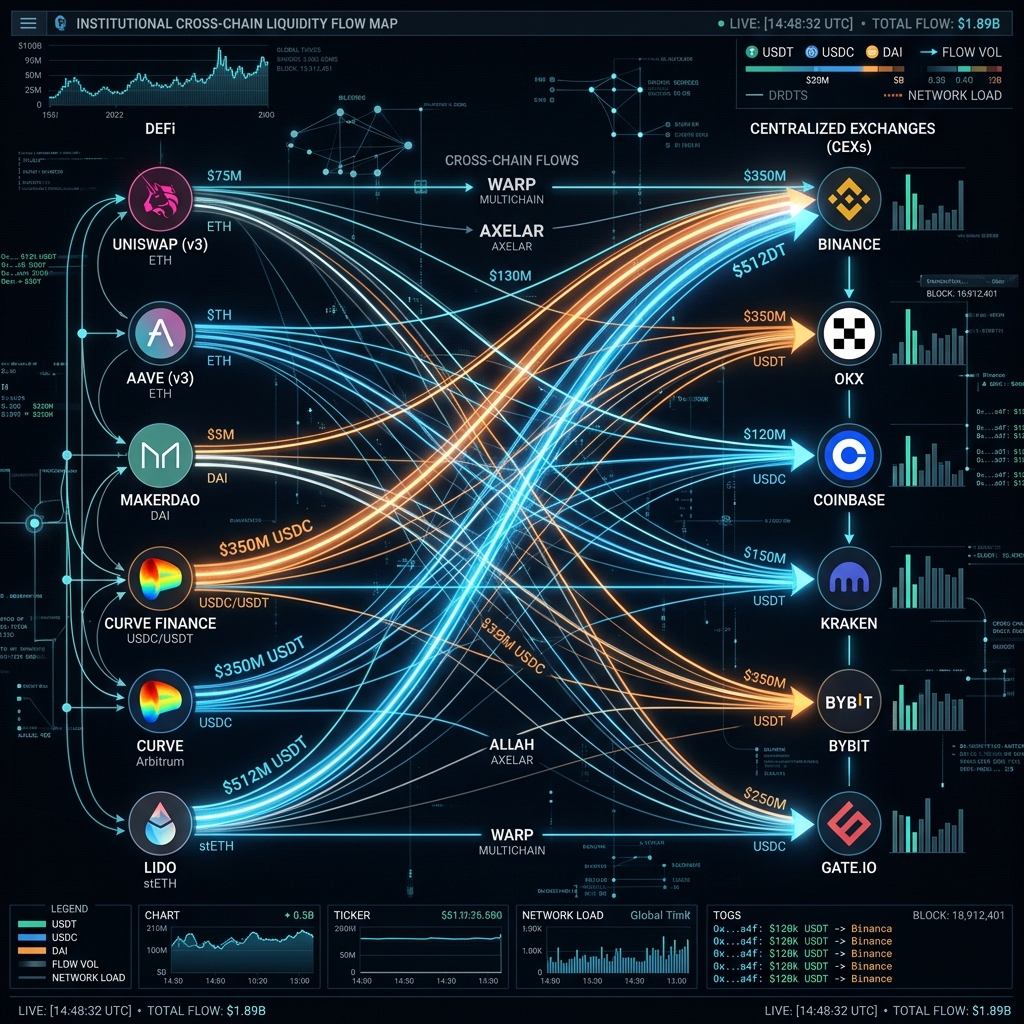
It is not just the total supply that matters, but the velocity at which those stablecoins are moving. The AlphaSignal Macro Hub tracks the cross-chain volume of stablecoin transfers from decentralized liquidity pools to centralized exchange (CEX) deposit wallets. A massive spike in CEX stablecoin inflows is the most reliable precursor to a massive buy-wall and an ensuing bullish momentum wave.
Ready to apply this strategy?
Access real-time, deterministic signals and institutional liquidity tracking directly in the AlphaSignal terminal.
LAUNCH TERMINAL